Culture and tradition
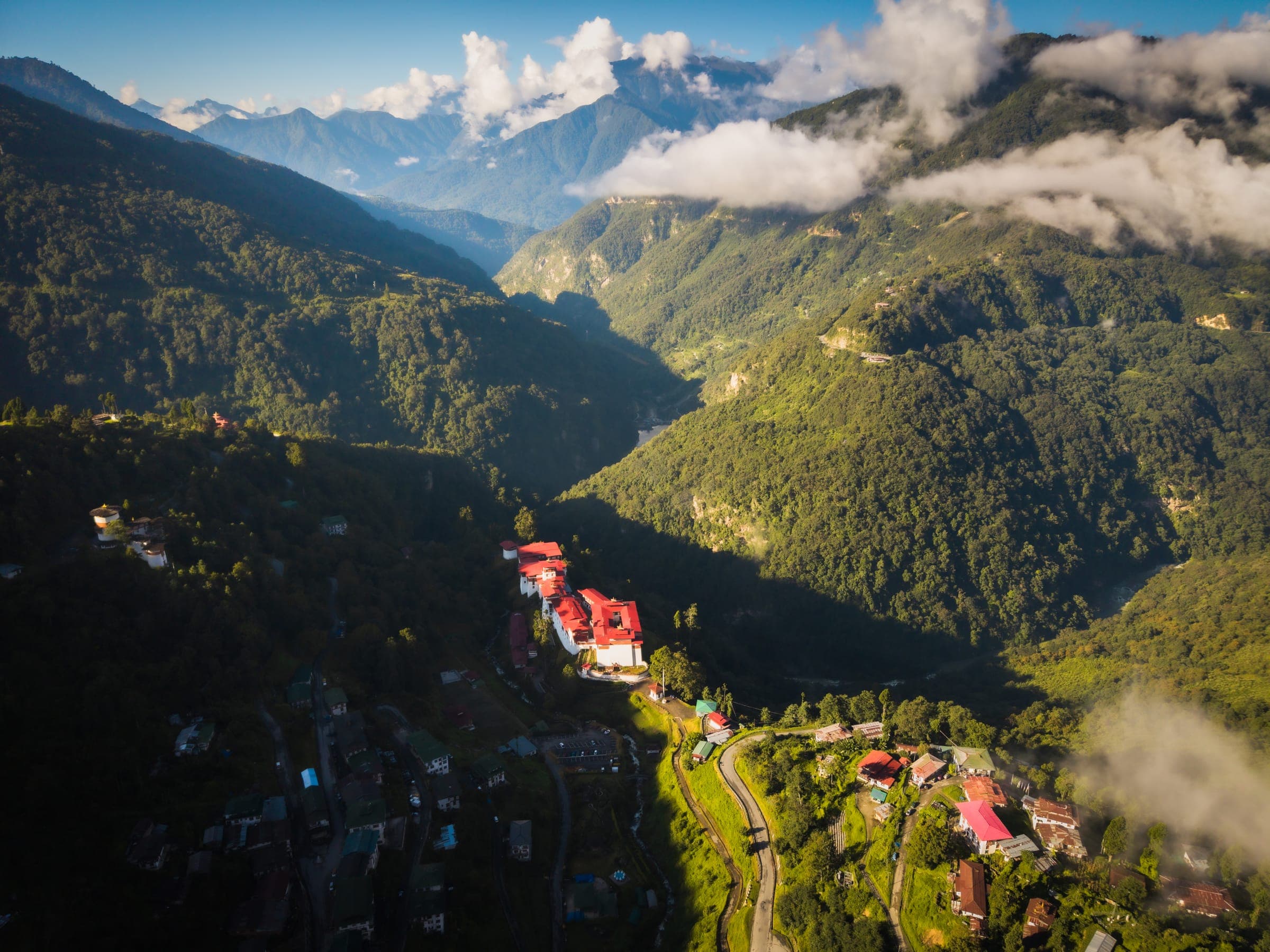
The unique culture and tradition of Bhutan is no longer a secret. The cultural diversity and its richness are profound. In fact, it is a crucial factor that assists in protecting the sovereignty of the nation.
Bhutanese Dress
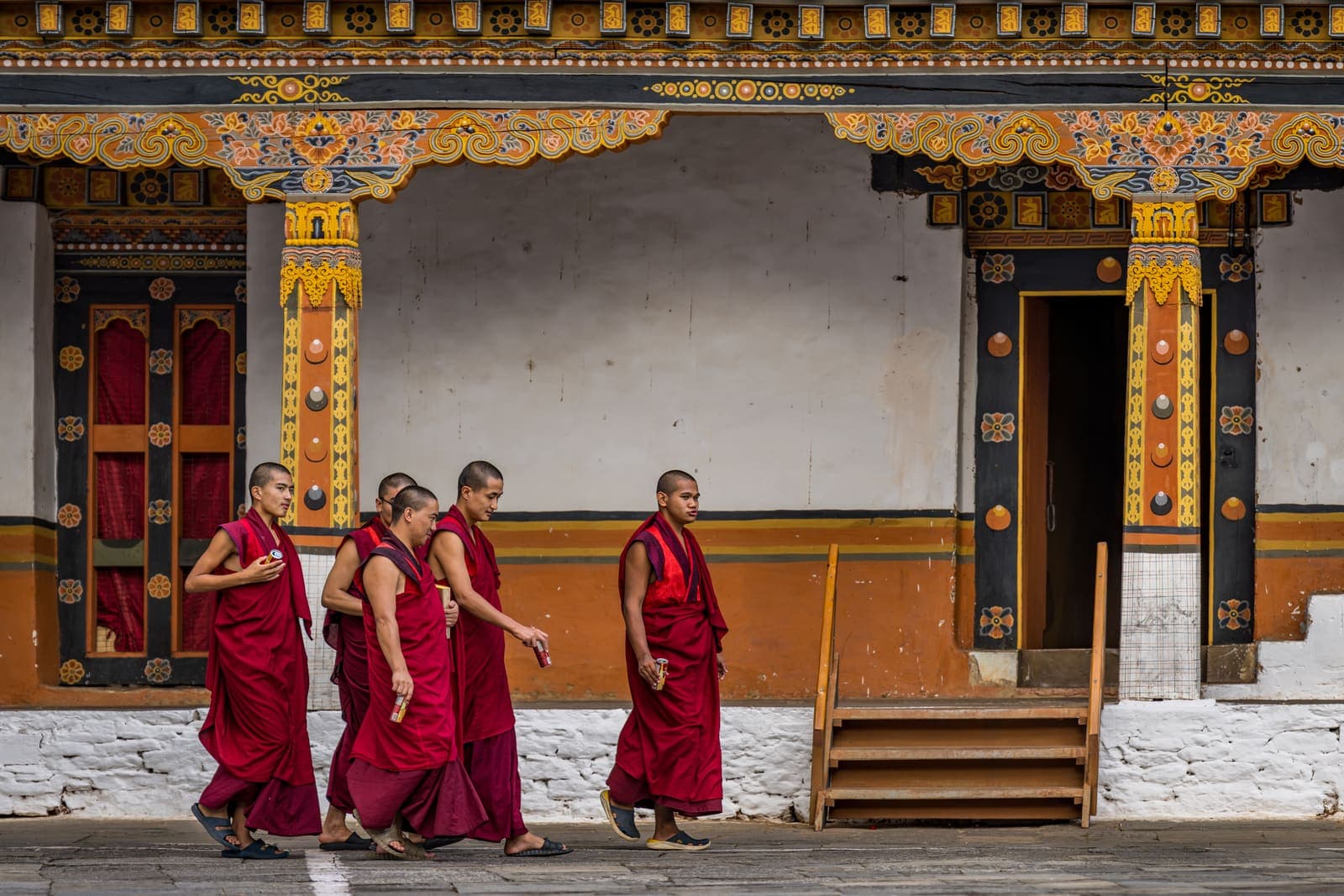
As unique as culture and tradition so are Bhutanese Dress.A distinctive feature of the Bhutanese is their dress that has evolved over the years. Gho is the dress worn by the Bhutanese men and Kira, dress worn by women. In keeping with the tradition, it is mandatory for all Bhutanese to wear scarves (kabney for men and rachu for women) while visiting Dzongs and other administrative centers.
Eating habits
Traditional Bhutanese eating habits are simple and generally eat with their hands. The family members eat sitting cross legged on the wooden floors with food being first served to the head of the household. It is usually women who serves food and in most cases the mother. Before eating, a short prayer is offered and a small morsel placed on the wooden floor as offerings to the spirits and deities. With modernization, eating habits have changed and in urban areas, people usually eat with spoons and make use of dining tables and chairs.
Festivals
Bhutan is rich in cultural diversity and this richness is further enhanced by the variety of festivals that is being observed. Every village is known for their unique festivals though the most widely known is the Tshechu. Tshechus are usually occasions to mark the important events in the life of the second Buddha, the precious Indian Tantric master known as Guru Rinpoche or the Precious Gem. Various mask dances are performed together with songs and dances for three days.
National Emblem
The National Emblem of Bhutan is a circle that projects a double diamond thunderbolt placed above the lotus. There is a jewel on all sides with two dragons on vertical sides. The thunderbolts represent the harmony between secular and religious power while the lotus symbolizes purity. The jewel signifies the sovereign power while the dragons (male and female) stands for the name of the country Druk yul or the Land of the Dragon.
National Flag
The National flag is rectangle in shape that is divided into two parts diagonally. The upper yellow half signifies the secular power and authority of the king while the lower saffron-orange symbolizes the practice of religion and power of Buddhism, manifested in the tradition of Drukpa Kagyu. The dragon signifies the name and the purity of the country while the jewels in its claws stand for the wealth and perfection of the country.
National Flower
The national flower is Blue Poppy (Meconopsis Grandis). It is a delicate blue or purple tinged blossom with a white filament.
National Tree
The national tree is cypress (Cupressus torolusa). Its capacity to survive on rugged harsh terrain is compared to bravery and simplicity.
National Bird
The national bird raven ornaments the royal crown. Raven represents the deity Gonpo Jarodongchen (raven headed Mahakala), one of the chief guardian deities of Bhutan.
National Animal
The national animal Takin (burdorcas taxicolor) is associated with religious history and mythology.
National language
Bhutan is a multi-lingual society. Today, about 18 languages and dialects are spoken all over the country. The state language is Dzongkha which in the olden times was spoken by people who worked in the Dzongs that was the seat of temporal and spiritual power. Later, Dzongkha was introduced as the national language of Bhutan.
National Anthem
The national anthem was first composed in 1953 and became official in 1966. It is known as Druk Tshenden Kepay Gyalkhab Na (In the land of the Dragon Kingdom, where cypress grows).
National Day
17th December is celebrated as the National Day of the country that coincides with the crowning ceremony of Gongsa Ugyen Wangchuck as the first hereditary king of Bhutan, in Punakha Dzong on 17 December 1907. It is a national holiday and every Bhutanese celebrates the day with pomp and festivity throughout the country.
Economy
Bhutanese economy is characterized by its small size. However, in general all Bhutanese have a shelter and are self – sufficient to large extent. For bulk of population are farmers, Bhutanese economy is dominantly agrarian followed by a large extent with animal husbandry. With rich bio-diversity, Bhutanese have also been able to tap the forestry resources.
In the recent years, since its opening in 1975, the country has made significant expansion in tourism industry. But undeniably, the power sector has been the biggest contributor to the Bhutanese exchequer. Another sector that contributes to the revenue is the contribution from the manufacturing sector. Some of the small scale industries that have cropped up are cement plants, calcium and carbide, steel and Ferro silicon, coca cola and also wood based industries. As a result of the economic development, today we have one of the highest per capita incomes in South Asia.
Environment
Bhutan’s high, rugged mountains and valleys boast of spectacular biodiversity earns it a name as one of the world’s ten most important biodiversity hotspots. The government has assured of maintaining 60% of its forest resources for all times to come through the recently enacted law passed by the National Assembly. The protected area comprises of four parks that is designated as home for the wild life sanctuaries.
Gross National Happiness: Development Philosophy of Bhutan
Defying the notion that amassing material growth does not necessarily lead to happiness, Bhutan is now trying to measure progress not by the popular idea of Gross Domestic Product but through Gross National happiness.
His Majesty the third Druk Gyalpo Jigme Dorji Wangchuck expressed his view on the goals of development as making “the people prosperous and happy”. Druk Gyalpo Jigme Singye Wangchuck said that the rich are not always happy while the happy generally considered themselves rich. The concept of Gross National Happiness claims to be based on the premise that true development of human society takes place when material and spiritual development occur side by side to complement and reinforce each other.
The four main pillars of Gross National Happiness are:
1. Equitable and equal socio-economic development
2. Preservation and promotion of cultural and spiritual heritage
3. Conservation of environment
4. Good governance which are interwoven, complementary, and consistent.
Have a question about your trip?
Our Thimphu team replies within 24 hours, usually the same day.