Where is Bhutan?
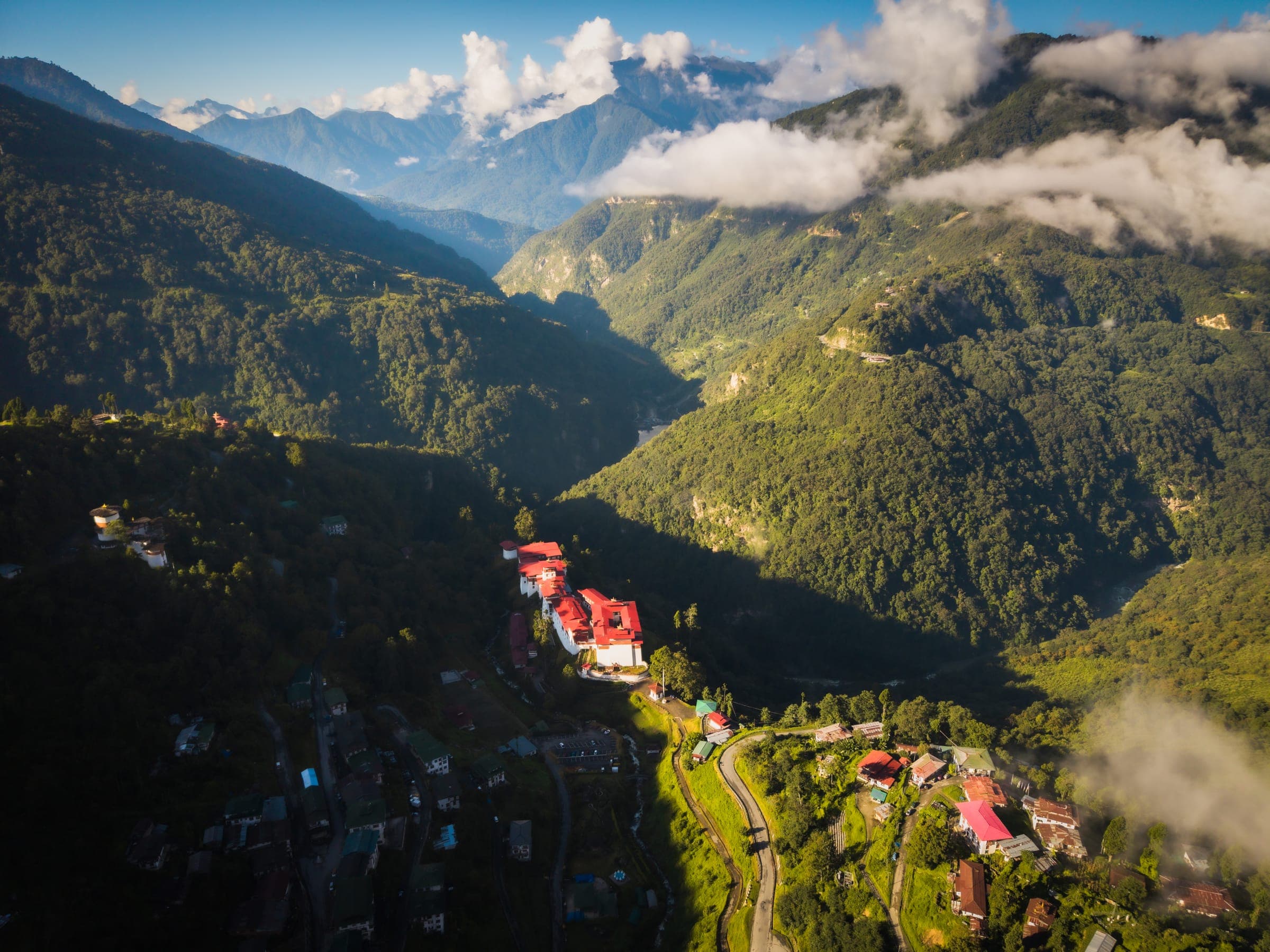
- Bhutan is a small, landlocked nation located in the eastern Himalayas between India and China. Its landscape ranges from subtropical plains and forests in the South to subalpine forests and snowy mountains in the North. Bhutan is a predominantly Buddhist country and is known as the last stronghold of Mahayana Buddhism.
Do I need to use a tour operator to book my travel?
- Yes, it is a government regulation that you must use a license Bhutanese Tour Operator to book your travel to Bhutan or one of their international partners.
Do I need a visa to enter Bhutan?
- All International tourists wishing to enter Bhutan require a visa which must be pre-arranged through a license Bhutanese Tour Operator or one of their international partners. Visa clearance must be obtained through your tour operator prior to Bhutan travel.
- For Indian national with passport or Voter Identity Card holders can get permits on arrival or e-permits before your Bhutan travel.
How much does the visa cost?
- International tourist visas a cost of USD $40 applies for Bhutan Tour and Travel. This can be paid in advance to you tour operator or travel agent. For Indian passport (or VIC) holders, Bangladeshi nationals and persons from the Maldives there is no cost incurred.
How do I get to Bhutan?
- There are a number of airports where you can fly into Bhutan from (Bangkok,Delhi, Kolkata, Bagdogra, Bodh Gaya, Dhaka, Kathmandu, Guwahati, Singapore and Mumbai) for your Bhutan Tours & Travel.
- At present two carriers operate to Bhutan are Drukair and Bhutan Airlines for Bhutan Tour pacakges. Also, there are three land border crossings which you can travel into the kingdom overland. All crossings are along the Indian border only - Phuentsholing, Gelephu and Samdrup Jongkhar with your e-visa for India. All travel arrangements to Bhutan must be made through a local tour operator or Bhutan local DMC.
What is the best time to visit Bhutan for Bhutan Travel?
- Spring (March to May) and Autumn (September to November) are the best seasons to visit Bhutan. These seasons offer pleasant weather, clear skies, and ideal conditions for trekking, Festival season and sightseeing.
- Winter (December to February) is great for a quieter experience but can be very cold, especially at higher altitudes.
- Summer (June to August) is monsoon season, so trekking can be challenging, and the trails might be slippery.
Is Bhutan safe for tourists?
- Yes, Bhutan is considered one of the safest countries in the world for tourists. The crime rate is very low, and the country is known for its peaceful and friendly atmosphere. However, as with any destination, it is always wise to take general precautions.
What languages are spoken in Bhutan?
- The official language of Bhutan is Dzongkha, but English, Hindi and Lhosampa (Nepali) is widely spoken, especially in urban areas and by tour guides. Most signs, menus, and public information are also in English.
What currency is used in Bhutan Travel Packages?
- The currency of Bhutan is the Ngultrum (BTN). The Indian Rupee (INR) is also accepted in Bhutan, though the Ngultrum is the preferred currency.
- There are ATMs in major cities, and credit cards are accepted at many hotels, restaurants, and stores. However, it’s always a good idea to carry cash for smaller establishments, especially in rural areas.
What should I wear in Bhutan during Bhutan Tour and travel?
- The weather in Bhutan Travel packages can vary depending on the season and region, so pack accordingly:
- Light, breathable clothing for the warmer months (spring and summer).
- Warm clothing for autumn and winter, especially at higher altitudes.
- Comfortable hiking boots and layered clothing for treks.
- Modest dress is recommended when visiting religious sites. Women should cover their shoulders and knees, and men should avoid wearing shorts.
Is there Wi-Fi and mobile coverage in Bhutan during Bhutan Travel and Tour?
- Wi-Fi is available in most hotels, restaurants, and cafes in major towns like Thimphu, Paro, and Punakha and other even Bhutan eastern Hotels also. However, the connection can be moderate or intermittent, especially in more remote areas.
- Mobile coverage is good in cities and towns, but coverage may be limited in rural and remote regions, during your Bhutan tour coverages your will enjoy 5G and 4G.
What kind of food can I expect in Bhutan Tour and Travel?
- Bhutanese cuisine is flavorful and often very spicy. Chili is used extensively in dishes, and cheese (particularly yak cheese) is a staple ingredient.
- Common dishes include:
- Ema Datshi (chili and cheese stew)
- Phaksha Paa (pork with chili)
- NoSha Paa
- Momos (dumplings)
- Red rice, which is the staple food
- Suja (butter tea)
- During your Bhutan Tour & Travel you will also get Indian cuisine both North Indian food and South Indian food in Bhutan.
- Vegetarian options are available, especially in monasteries and places serving traditional Bhutanese food.
Can I trek in Bhutan Travel?
- Yes, Bhutan is famous for its trekking and hiking routes, offering some of the most beautiful landscapes in the world. Popular treks include the Tiger’s Nest Monastery hike, Jomolhari Trek, and Snowman Trek.
- Most treks require a guide, and some treks are quite challenging, so preparation is key.
15. Do I need to book a tour to visit Bhutan Travel?
- Yes, all tourists to Bhutan Tour including Indian, Bangladeshi, and Maldivian citizens and International foreigner must book a tour through a licensed Bhutanese tour operator, who will arrange your visa, accommodations, transportation, and guide.
- Customize tours itinerary can be organized based on your interests, such as culture, adventure, or nature.
16.What are the cultural norms and etiquette in Bhutan?
- Respect for religion is a key part of Bhutanese culture Tour. Always be mindful of local customs:
- Remove your shoes when entering temples and monasteries.
- Respect monks and local people, especially in religious spaces.
- Dress modestly when visiting religious sites.
- Don’t touch sacred objects or statues in temples and dzongs.
- Always give and receive items with your right hand or with both hands as a sign of respect.
17. Can I shop for souvenirs in Bhutan during Bhutan Travel and Tour?
- Yes, Bhutan offers many unique souvenirs, such as:
- Handwoven textiles (scarves, shawls, and blankets).
- Thangka paintings (traditional Buddhist scroll art).
- Wooden carvings, masks, and religious artifacts.
- Local jewelry and handmade crafts.
- Markets in Thimphu, Paro, and Punakha are great places to shop for Bhutanese goods.
18. Is Bhutan a good destination for solo travelers for Bhutan Tour?
- Bhutan is generally safest in the world for solo travelers, but traveling with a licensed guide is mandatory and better safe, and authentic. Solo travel is a great way to experience Bhutan's tranquility, especially in rural areas and nature-focused destinations.
19. How can I support sustainable tourism in Bhutan?
- Bhutan is deeply committed to sustainability and conservation Tourism. As a visitor, you can help by:
- Respecting local traditions and cultural practices.
- Reducing waste and being mindful of your environmental impact.
- Supporting local businesses and handicrafts.
- Traveling with responsible tour operators who promote sustainable tourism.
20.Can I use my international credit card to pay for my visa fee and Tour payment to Bhutan Online?
- Yes, it is possible to use your credit card to pay for your visa and SDF online. However, we strongly recommend that you notify your bank prior to making the credit card transaction to ensure that the payment is processed successfully. If they are not informed in advance, sometimes international banks will block online payments to Bhutan as part of the bank’s online security measures.
- There is a charge of Nu. 4,500 per car, per day. A guide is also mandatory and will be at an additional charge and Bhutan Tour packages cost.
- If guests want to bring their own car, the cars must meet the requirements of Bhutan's Roads Safety and Transport Authority, and must also have a valid driver's license, insurance documentation, pollution control documentation, an entry permit, and a vehicle in reasonable condition. A valid Indian driver's license is accepted for self-driving within Bhutan. The same fees and rules apply for motorbikes.
- In case the vehicle is not owned by the guests travelling to Bhutan, an authorisation letter is required.
Required Vehicle Documents for driving own car to Bhutan Travel:
- Original Vehicle Registration Certificate (RC): The vehicle must generally not be more than 10 years old from the date of registration.
- Driving License: Original valid driving license of the person driving.
- Vehicle Insurance: Valid insurance policy with coverage applicable in Bhutan.
- Emission & Road Worthiness Certificate: Valid pollution control (PUC) or fitness certificate.
- Authorization Letter: Required if the vehicle owner is not traveling inside the car as the driver.
- RSTA Permit Form: Duly filled application form at the border/RSTA office
- The Sustainable Development Fee (SDF) is a daily levy paid by visitors to support Bhutan’s development. Since the kingdom first opened its doors in 1974, guests have played a critical role in our country’s growth.
- The SDF is collected by the national exchequer and funds are allocated to various projects that create long-term, sustainable opportunities for the Bhutanese people, through free healthcare, education and training, upskilling the tourism and hospitality industry, improved infrastructure, environmental preservation and conservation, cultural preservation programmes and initiatives that support local businesses and economies. The SDF is also a vital means of maintaining the exceptional forest cover and carbon-neutrality for which our small nation is world-renowned and globally critical. The SDF also helps us to ensure that we can continue to offer guests tranquility and an intimate experience.
- ATM and banks accept Visa and Mastercard. International credit cards are widely used in urban areas of Bhutan during your Bhutan Travel. However this service may not be available in other parts of the country. Visitors can download the digital wallet gobob launched by the Bank of Bhutan, which can be used with a local SIM card and is widely accepted throughout the country. Another option is the MyPay digtal wallet app launched by Bhutan National Bank. Both apps can be connected to international credit cards and used widely.
- Cash in US dollars and Indian rupees is also widely accepted. We advise bringing some cash in either of these currencies, or in Bhutanese ngultrum.
- While most of the monuments enter fee in Bhutan are payable, some few are only not chargeable. For the full list of monument fees, children below 18 years will have a 50% concession and children aged five years and below will be exempted. Most monuments are open from 9am - 5pm each day. In June 2023 it was announced that foreign visitors can now visit monuments whenever they are open to the general public, without any restrictions.
- A local guide will help you see the best that the country has to offer and will ensure your safety when exploring unfamiliar terrain and altitude. It is mandatory to be accompanied by a guide at all times in Bhutan Travel also Bhutan Tour operator/Bhutan local DMC. Guides are also mandatory for visitors who enter Bhutan via our land borders and plan to travel beyond the border towns. Guests no longer require a Route permit to travel around the country, so long as they are accompanied by a guide certified by the Department of Tourism.
Have a question about your trip?
Our Thimphu team replies within 24 hours, usually the same day.